


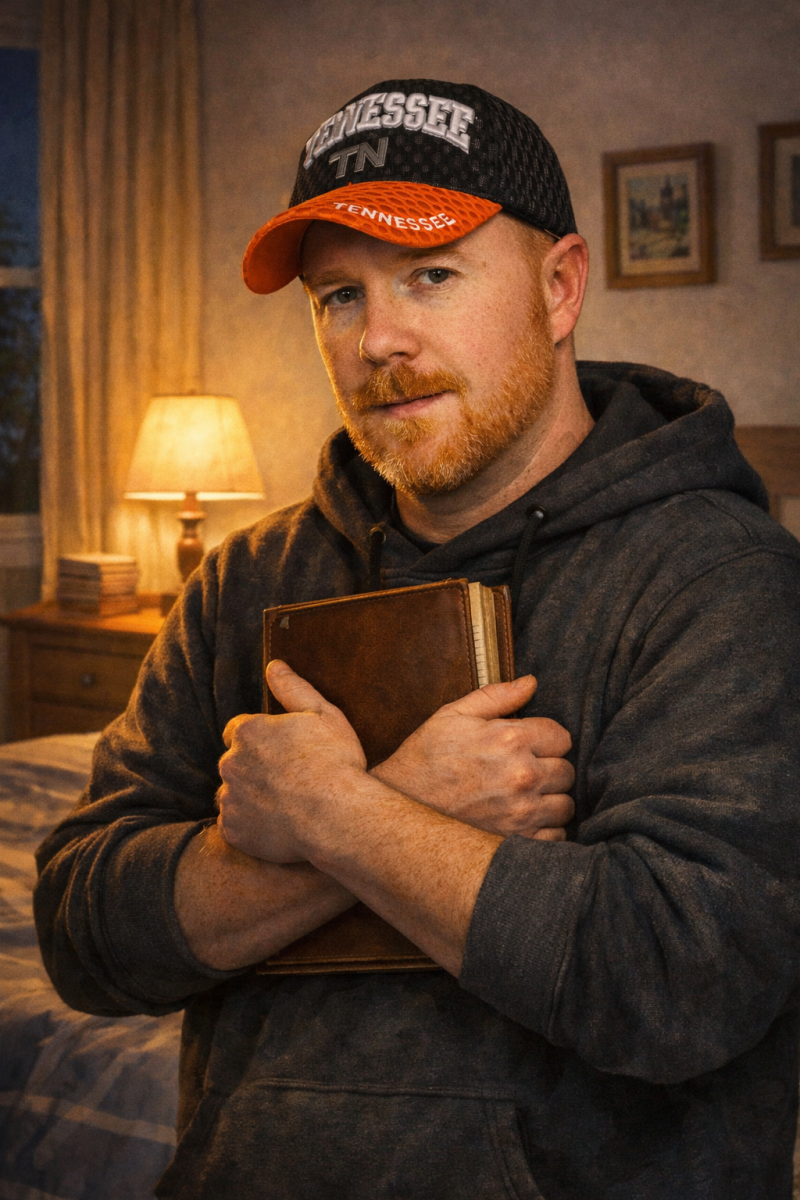
I remember growing up in the 80s, in small-town America, when expectations felt different. When you’re young, there is almost always a glimmer in your eye, a hope in your dreams that time has not yet had the chance to destroy. I wanted to be something. I think that hope lives in all of us when we are children. I wanted to become something that touched people in profound ways. Even at eight or nine years old, my home life had already planted in me a longing for something better, a reaching for some future where life would finally feel different. In my mind, it was always later. Always years down the road. But I believed it with everything in me: one day, it would be better.
I remember being a little boy driven by fear to please other people, convinced that if I could just do everything right, maybe life would hurt less. I was always trying to have the right answer in class, always hungry for that approving look from the teacher, always trying to be good, tidy, polite, organized. That was the one small piece of life I could control, because there were so many other things I could not control. So many dark things I could not stop, could not pull into order. I clung to being good because I thought if I failed, even for a moment, the whole world would be disappointed in me. And after a while, that disappointment stopped feeling like a possibility and started feeling like a shadow that followed me everywhere. It did not matter how good I was. It did not matter how righteous, how kind, how obliging, how careful. Somewhere inside me there was still this creeping dread, this fear, this torment, as if something terrible lived just under my skin. I knew I was different from the people around me, and that knowledge terrified me before I was even old enough to understand it. I only knew that something in me felt wrong, and I wanted desperately to know what it was. But I could never name it. I could only fear it.
I remember stopping my dad one night as we were walking into the house. He was unlocking the door. My twin brother was standing there beside us. Something in me was breaking open. I was full of a fear so deep and so shapeless that I could not even explain it. By then, the darkness inside me had already begun to poison everything. My dreams had curdled into nightmares. My thoughts had grown darker than the blackest night. I had wrestled with that darkness for so long that I had started to believe it was who I was. I had convinced myself I was a bad seed, that there was something ruined in me, something beyond saving. And standing there on that porch, I told my dad I knew he did not love me the way he loved my brothers. I told him I knew he did not enjoy being with me the way he did with them. I know now those words must have cut him deeply. But at the time, they were not meant to wound him. They were the sound of a child drowning and not knowing how else to cry out. He didn't know how to answer me. He only told me he loved me the same. My father was an amazing man. Not once in my life did he ever raise his voice at me. But emotion was not something he knew how to handle, and I think he sensed there was something different about me without understanding what it was. He was confused, just as I was confused. Still, he tried. He genuinely tried.
Later, as a teenager, the fear inside me grew so loud and so relentless that I began writing my thoughts down because I didn't know what else to do with them. I could not get hold of what was happening inside me. I could not understand why I felt so different, so abnormal, so wrong, so damaged. I felt like a tower filled with darkness that could never be right. So, I filled my journal. Page after page. Thought after thought. I wrote because I was trying to sort myself out. Trying to make sense of the confusion. Trying to breathe. Trying to survive. The oppression, the depression, the fear — it all grew so thick it felt like I was breathing through a wet cloth. It was suffocating. Exhausting. Unending.
Then one day, after years of pouring myself into that journal, my mother found it.
I will never forget the moment my father came to me at the hardware store where I was working and told me he needed to talk to me. There was something in his voice that made my blood run cold. His face looked stricken, weighed down, almost wounded. It terrified me. In an instant my mind started racing, flipping through every possibility, every disaster, every secret that might have somehow made its way into the light. He pulled me to the stockroom of the store and wrapped his arms around me, tears streaming down his face. That shook me to my core, because my dad did not cry. Ever. Seeing him cry like that felt like watching the world split open. He could barely get the words out. He told me my mother had found my journal and wanted to talk to me. And in that instant one fear rose above every other fear: What had I written in that book? I couldn't remember every page, every thought, every confession I had spilled into it over the years. I only knew there was one thing in particular that I prayed had never made it onto those pages. One thing I feared more than anything. Had I written that I had feelings for other boys? Had I put that into words? Had I said it plainly? From that moment on, I could think of nothing else. I was shaking. I was probably fifteen. And the walk home that night felt heavier than anything I had ever lived through. All I wanted was to get my hands on that journal and read every page before anyone else could. I needed to know if I had betrayed myself in ink. I needed to know if the thing I feared most had been exposed. I thought, surely, if it was in there my father would have mentioned that.
I remember walking into the house with my dad that night. It was just my mother, my father, and me. My mother sat in her desk chair in the back room, and my journal was lying in front of her. My eyes went straight to it. I hated that journal in that moment. Hated it. Hated myself for ever writing in it. I wanted to snatch it up and burn it before another word could be read. I wanted to rip it apart with my bare hands.
My mother looked at me through tears and told me she loved me. She said she would take me to church for prayer. She said she would get me help. The moment those words left her mouth, my stomach dropped so hard it felt like the floor had vanished beneath me. My heart started pounding so violently I could barely breathe. I listened to every word she said, but underneath it all I was listening for something else — some sign, some phrase, some clue that told me she had found the thing I was most afraid of. I had always worried someone might find that journal, so I remember thinking I would hide things in code. But the truth is, the code of a thirteen-, fourteen-, fifteen-year-old boy is not nearly as clever as he thinks it is. My mother pulled me into a hug and held on tight. I always dreaded her hugs. I dreaded her touch. But even then, trapped in her arms, all I could think about was getting free, grabbing that journal, and running to my room to see what I had written. I couldn’t remember. I could not remember if I had named it. If I had admitted it. If somewhere in those pages I had written that I was gay. That I was queer. And inside my own mind, the language I used for myself was brutal. Merciless. I hated myself with a violence I could barely contain. While my mother held me, every second felt like torment stretched thin. I wanted so badly to pull away, to run, to get out of that room before the air crushed me. All I wanted was to lock myself in my bedroom and cry where no one could see me.
Every second she held me, I screamed on the inside, begging her to let me go. When she finally did, I wiped my eyes, snatched up my journal, and fled to my room. I did not come out again that night. I sat on my bed and turned page after page with trembling hands, searching for evidence of my own destruction. I looked for one word, one phrase, one careless sentence that might have betrayed me. I found nothing. Then I looked again, slower this time, terrified I had missed something. Still nothing. When the certainty finally settled over me, I breathed out in absolute relief.
But that relief was not freedom. It was only survival.
That night did not set me free. It taught me how to hide better.
My mom did drag me up to the front of the church during an "alter call" and had our pastor prayer over me. She told him that I thought I had a demon because that's one of the things I had written down. Truth be told, the "demon" I was talking about was being gay. Thankfully, I didn't write that.
What began there turned into decades of deeper silence, deeper shame, deeper self-hatred. I could not let anyone know who I was. I could not let anyone truly see me. Somewhere in my heart, a vow was made in the dark: never again. Never again will I be this vulnerable. Never again will I risk being known. So I took the softest, truest parts of myself and buried them alive. I built walls so thick around my inner life that eventually even I forgot what it felt like to live without them. I locked myself away and handed the world a version of me that I thought it might tolerate.
And for years, so many cold years, I mistook that performance for living.
On the outside, life kept moving. Time passed. I grew older. I learned how to function, how to smile, how to work, how to speak, how to survive, how to be fake. I learned how to be present without ever really arriving. I learned how to make myself useful, agreeable, dependable. I learned how to become the version of myself that would cause the least disruption, the least suspicion, the least disappointment. But underneath all of it, the old dread still lived there. Quiet sometimes. Louder at others. Waiting. It followed me into rooms, into relationships, into churches, into mirrors, into prayers. It sat beside me when I was alone. It spoke when other people fell silent. It told me I was wrong. It told me I was broken. It told me that if anyone ever saw all of me, they would leave. They would be disgusted.
And for a long time, I believed it.
That is the cruelty of fear when it gets into you young. It does not merely frighten you. It teaches you how to abandon yourself before anyone else gets the chance.
It took me decades to understand that the torment I carried was never proof that something was wrong with me. It was proof of what fear can do to a child. It was proof of what shame can do when it is planted early and watered for years. The darkness I lived under was not my identity. It was not the truth of who I was. It was a cage built out of other people’s expectations, other people’s silence, other people’s inability to understand what I had not yet learned myself.
The most taxing part was trying to morph myself into something I was not. Worrying so often how my voice sounded. Stressing over what my walk looked like. Wondering if my mannerisms betrayed me. Working so hard to keep everything as masculine as possible. I'd lay awake at night tormented over the thought that I had accidentally let the me out that I desperately hid. It's an exhausting thing, ensuring that everything about myself was something that I truly wasn't. Did I move my hands wrong? Did I walk down the school halls a little too dainty? Did I speak in a gay tone? Did I wave limp wrists every time I tried to express real feelings? These were all apart of my fears.
And the hardest thing to admit is this: I helped keep that cage standing.
Not because I was weak. Not because I was cowardly. But because I was trying to survive. I'm the one that built that cage. I'm the one that built those walls.
I write this now because recently something happened that pulled all of that old pain back to the surface. For a moment—just a moment—I was not an adult anymore. I was that frightened, little child again, desperate for approval, shrinking under the weight of someone else’s dismissal. There are moments when one cutting look, one careless rejection, one sudden disrespect from someone you admire, someone you love can crack open decades-old wounds. And when it happened, I felt myself falling backward through time. I felt the old terror rise in me like floodwater. I felt those same demons stand up and whisper that nothing had changed, that I was still that broken boy, still unacceptable, still not enough. Still wrong. Still damaged.
And for one terrible moment, I almost believed it.
I almost said, "I cannot do this anymore."
I almost said, "I cannot go through this again."
That is how powerful old pain can be. It does not ask permission before it returns. It just reaches up from the past and wraps its hands around your throat.
But this time, something was different.
This time I did not stay there.
This time, somewhere beneath the panic, beneath the grief, beneath the old reflex to disappear, there was a quieter voice. Older. Truer. Hard-won. A voice that had taken decades to hear clearly. And it said: No. Not this time. You do not have to go back into that cage just because someone else does not know how to see you. You do not have to hand your worth over to people committed to misunderstanding you. You do not have to make a home inside of rejection.
That voice did not come to me overnight. It came through years. Through heartbreak. Through loneliness. Through surviving things I once thought would destroy me. Through slowly learning that peace is not found in finally pleasing everyone. Peace is found in no longer needing to.
And that changed everything.
I have to release the people who would never accept me. I have to stop standing at the locked doors of hearts that had already decided not to open. I had to let go of the voices that only knew how to measure me by their fear, their discomfort, their limitations. I had to stop returning to the place of my own wounding and asking it to become my place of healing.
It never would.
Some people will never acknowledge that you are not what's wrong. Some people will never say they were the one mistaken. Some people will go to their graves needing your silence more than your truth. And painful as that is, I cannot spend my life trying to earn humanity from people determined not to give it.
So I must let them go.
Not all at once. Not without grief. Not without nights of anger and tears and shaking and mourning the love I wanted but never truly had. But I let them go.
And in that letting go, something happened.
The air changed.
The war inside me began to quiet.
I started to understand that peace does not always arrive like lightning. Sometimes it comes like dawn. Slow. Almost imperceptible at first. A softening at the edges of your thoughts. A loosening in your chest. A day when you realize you have gone hours without hating yourself. Then a full day. Then a week. Then one morning you wake up and the voice that once condemned you is no longer the loudest voice in the room.
I wish I could say healing was instant. It was not. It was long. It was ugly at times. It required grieving the child I was, the teenager I was, the man I became while trying not to be myself. It required forgiving what I could, and where I could not forgive, learning at least to stop drinking the poison of it every day. It required telling the truth. First in whispers. Then in steadier language. Then in a full voice.
But somewhere in all of that, I found myself.
Or maybe, more honestly, I stopped running from him.
And what I found was not a monster. Not a bad seed. Not a disappointment. Not a ruin. I found a person who had been frightened for a very long time. A person who deserved gentleness. A person who had survived immense loneliness and still managed to keep a heart capable of love. A person who had spent years believing he was unworthy of peace, only to discover that peace had been waiting for him the whole time, just outside the walls shame had built.
It took me decades to get here.
Decades to understand that I never needed anyone’s permission to exist.
Decades to understand that truth does not become uglier because someone refuses to bless it. Decades to understand that being seen is not the same as being condemned.
Decades to understand that I was never the thing that needed fixing.
And now, when the old dread rises, when some fresh wound stirs ancient pain, I do not bow to it the way I once did. I know what it is now. I know where it came from. I know it is old weather, not prophecy. I know it will pass. I know I can stand in the middle of it and remain myself.
That is peace.
Not the absence of memory.
Not the erasing of pain.
But the end of its power to define me.
I still think about that boy sometimes—the one standing on the porch with my dad, the one clutching a journal, the one sitting on his bed in terror, flipping through pages as if his whole life depended on what they might reveal. I think about how scared he was. How alone he felt. How convinced he was that if the truth were ever known, love would end. How that he contemplated ending it all because the pain and shame was too much to face.
I wish I could go back and sit beside him.
I would tell him:
You are not wrong.
You are not filthy.
You are not a mistake.
You are not a ‘bad seed’.
There is nothing cursed in you.
You do not need to spend your life apologizing for being alive.
One day, the fear you’re feeling will loosen its grip.
One day, you will breathe without shame.
One day, you will look in the mirror and not flinch.
One day, peace will come.
One day that loneliness will disappear and you will find your soulmate that completes you and fills that void that follows you.
The day that you’re dreaming of now way off in the future will come.
And it did.
Not quickly. Not cheaply. Not without cost. Because it cost a great deal.
But it did come.
And after all these years, that is the truest thing I know.
Add comment
Comments